Archive for Uncategorized

Best Friends hosts ‘Back in Black’ adoption event

Toby and Duchess -- my two black dogs

Duchess and Toby are my two dogs.  Duchess is 16 years old and Toby is nuts …(urg, I mean 3 years old).

My husband and I adopted Duchess and Toby from a city shelter, and they are awesome dogs.  When they behave, everyone says what nice black-lab crosses we have. When they don’t behave people think we have scary, “big black dogs”.

Black dog and cat bias is a problem for many shelters because so many wonderful animals, much like Toby and Duchess, are overlooked for lighter colored animals.  That’s why Best Friends (and many other groups) are working to help our black-furred friends find homes.

Check out Best Friend’s ‘Back in Black‘ adoption event.

P.S. Why does every picture of my dogs make them look like they have ghost-eyes — it’s almost worse than ‘red-eye’.  Does anyone know a computer program to take out the ‘white eye’ reflection from dog pictures? My Google Picassa program only takes out ‘red-eye’ from people faces.

Leave a comment »

And yet another way to make it right for dogs and puppies

It’s been a great day for the grassroots movement against puppy and kitten mills with Glendale, CA banning the retail sale of dogs and cats, but it turns out that industry can play a big role in stopping the suffering and overpopulation issues that stem from industrial sales of animals.

The Irvine Company, who owns malls where pets stores are still selling animals in Newport Beach California, has decided to exclude renting retail space to any company selling pets — thereby banning the sale of dogs and cats in their pet stores. (reference). Who says we have to wait for the government to make the change?

But there is more good news, this time out of Canada.  The PJ’s Pets and Pets Unlimited chain of pet stores has announced that its 41 stores across Canada will no longer sell puppies, citing the need to help homeless pets finds good homes.

Having personally come face to face with PJ’s Pet representatives on opposing sides of our fight to ban the sale of puppies in Richmond, BC pet stores, let’s just say PJ’s Pets/Pet Unlimited has made a heroic change of heart — and bravo for them!  They deserve our appreciation for making such a big change in the Canadian pet industry which, according to PIJAC, continues to oppose restrictions on retail sales of pets.


Comments (1) »

Cowabunga! Glendale passes ban on retail sale of dogs and cats!

In an open and shut case, the Glendale City Council in California passed a ban the sale of dogs and cats in retail outlets, thereby pinching off the flow of money to puppy and kitten mills and ending impulse retail animals sales that so frequency leads to pet surrender and pet abandonment.  We owe a whole bunch of thanks to the Companion Animal Protection Society (CAPS), who also ushered in the West Hollywood ban and has helped many other cities do the same.

Update!  I just learned that a small group of activists got the puppy sale ban ball rolling in Glendale. Prior to this vote, Christy Schilling, resident and activist, approached the owner of Pet Rush, a pet store selling dogs in Glendale, and encouraged them to stop selling puppy mill dogs.  Pet Rush owner Rene Karapedian choose to stop selling dogs in favor of helping rescued animals find homes.  Both Schilling and Karapedian indicated their support for the ban for council. (Ref:  Examiner, and a special thanks to Andrea (reader) for letting me know about the team effort (see comments).)

Well done CAPS, Christy, Rene and Glendale!  Let’s make sure Seattle isn’t far behind!

Click here to send a thank you note to Glendale councilors for their bravery to tackle a tough issue.

Comments (3) »

New name: King County Pet Adoption Center

Good news from the Regional Animal Services of King County!  They have changed their name to show improvements to their adoption activities, and their efforts to reduce the sad practice of euthanizing the populace of animals the fill municipal shelters .  Now called King County Pet Adoption Center, the group will focus even more on preventing euthanasia at it’s facility in Kent.  Read more here.

Leave a comment »

AMONG THE ANIMALS: Agency works to prove pit bulls don’t deserve their bad rep

Ducati the pit bull for adoption through Bullseye Dog Rescue

Originally printed in City Living
Copyright (c) Pacific Publishing Company
By Christie Lagally

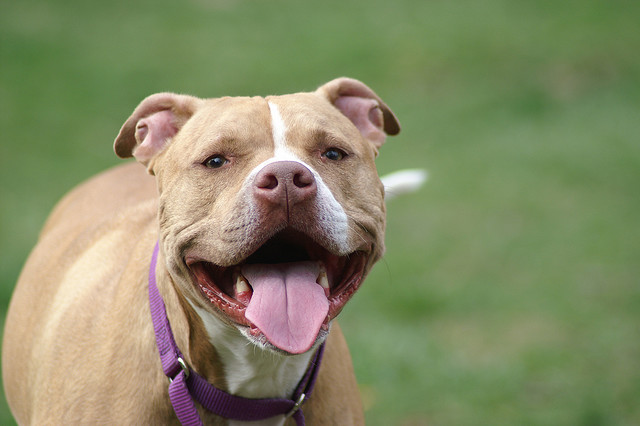
As the recipient of a Canine Good Citizen award, Ducati has proven herself to be a wonderful dog. This tan-and-white beauty is great with kids and loves everyone she meets as if they are her new best friend.

But after seven years as the beloved family dog, Ducati’s family was forced to give her up because the rental housing they moved to would not allow dogs of the pit bull breed.

Sadly, the family’s landlord may never know the tragedy that he or she caused his new tenants with a blanket prejudice against the pit bull terriers. Ducati’s loving and even temperament is a typical example of pit bull personality.

Ducati now resides with a foster family working with BullsEye Dog Rescue.

Media stigmatization

Unfortunately, Ducati’s story is not uncommon. Pit bulls and their owners bear the burden of a social stigma that labels pit bulls as inherently aggressive or dangerous.

Ducati kissing a young friend

“It’s a prejudice brought on by sensationalized media coverage of dog-bite incidents involving a pit bull, and the tendency of the media to largely ignore aggressive incidents caused by dogs of any other breed,” explained Lorrie Kalmbach-Ehlers, president and co-founder of BullsEye Dog Rescue.

Unfortunately, that stigma may be one reason that pit bulls make up as much as 30 percent of the dogs at the Seattle Animal Shelter as potential adopters overlook such dogs despite their great temperament.

“Pit bull and pit bull-crosses pass our dog-temperament testing at the same rate as all other breeds,” said Kara Main-Hester, spokesperson for the Seattle Animal Shelter. Main-Hester said that, while pit bulls aren’t more difficult to place, they usually take longer to adopt out than other breeds.

“If people are nervous or scared of pit bulls, they should educate themselves about the breed,” Kalmbach-Ehlers said. In fact, according to the American Temperament Testing Society, pit bulls rate higher on temperament tests than even golden retrievers.

Changing perceptions

So to brighten the future of so many pit bulls residing with rescue groups and shelters, BullsEye Dog Rescue aims to challenge public misconceptions by making it obvious pit bulls can be wonderful dogs.

BullsEye works with shelters to provide education on the breed and holds events like Pit Bulls on Parade in Issaquah to give the public a chance to see friendly, well-adjusted pit bulls in our community. On Aug. 20, the public is invited to come see the parade and meet dogs like Ducati with the typical pit bull temperament: friendly, patient and full of heart.

But education isn’t always enough to combat societal views. That’s why BullsEye also offers support to pit bull’s owners, including workshops on responsible pet ownership and obedience classes for low-income families through the Responsi-Bull Project.

So while fear and scary stories of aggressive pit bulls may drive the media frenzy that typically happens when dogs of almost any breed cause harm, BullsEye confronts this issue with solid evidence of the typical pit bull nature exhibited in the dogs they adopt out, train and nurture.

To learn more about the pit bull breed, Bullseye Dog Rescue, the Pit Bulls on Parade event and Ducati, visit www.bullseyerescue.org.

copyright (c) Pacific Publishing Company

Leave a comment »

Cage-free is easy, and it’s the right thing to do

During my ride to work just a few weeks ago, I saw a transport truck stacked high with chickens in cages with not enough room to even stand.  What’s more, they were loosing their feathers onto the road because they were unprotected from the highway wind.

These were likely battery cage hens headed for a life in those same cages.  When I got to work, I stepped out of the office to take a few minutes to cry about what I’d just seen and the sad life of hens in our world today.  Especially, when there is such an easy alternative.

Chickens lay eggs.  They still lay eggs when they are out of cages.  So no one need go with out their morning eggs, as long as you buy the cage-free eggs.  It’s that easy: it’s that simple.

Cage-free eggs are becoming more common, and even less expensive over time.  Yes, you might find that buying cage-free eggs is a little more expensive, but the lifetime of cruelty and suffering that you’ve prevented is far more valuable than $0.50 more on a dozen eggs.  Please, please buy cage free today and everyday.

Here is one more thing you can do to make a difference, and it’s just as easy as buying cage-free eggs.

Encourage McDonald’s Canada to become 100% cage-free.  The World Society for the Protection of Animals (WSPA) has an easy submission form to write to McDonald’s asking them to serve cage-free eggs, while the news from McDonald’s USA and Europe is encouraging.

“McDonald’s® restaurants across the UK and Europe are already cage-free. In the USA, McDonald’s® has stated they aim to use 12 million cage-free eggs this year. It is time for McDonald’s® Canada to follow these examples.”  ~WSPA

To help McDonald’s Canada become cage-free, click here.  Note many other companies have already made the transition.  Please ask your company or school to make the switch.  It’s easy, and it’s the right thing to do.

Leave a comment »

Pits Bulls and Perception by BestFriends

Comments (1) »

Northwest Pet features northwest ferals

In a recent City Living article, I featured the Feral Cat Spay/Neuter Project located in Lynnwood, WA.  Another version of that article has been published in Northwest Pet Magazine along with links to resources for feral cats in the Spokane area.

Check out the article, ‘Feral Cats – more than just a quick fix’ on page 10 of the August 2011 issue.

Leave a comment »

Interview with Pat Smyklo of Hungry Kitty in Oakland, CA

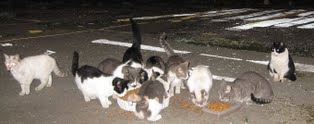
While I’ve recently covered the activities of feral cat trappers and feeders here in the Seattle area, I received word about a group working on feeding Seattle’s California feline cousins.  Below is an interview with Director Pat Smyklo about Hungry Kitty, a non-profit group feeding and fixing ferals in the heart of Oakland, CA.

Sniffing Out Home (SOH):  When was Hungry Kitty founded?

Smyklo:  I have been taking cats in to be fixed since 1980 when I moved into my flatland Fruitvale home. As important as it is to feed cats, it is important to fix them too. So, fixing them has always been a top priority. My neighborhood was overrun with sickly cats and kittens when I first moved in, and I am glad to say that there have been no new litters of kittens born in my neighborhood for over twenty-five years.

I got the nonprofit status a few years ago and then met up with another cat person that I had known in the past. She was feeding some colonies of cats, and I began helping her. Soon, we were feeding about one hundred and fifty cats a night. The needs of the nonprofit just exploded. So, I bought the food out of my own income and posted for donations too. Getting cat food donations is just very difficult. Some stores break dog food bags very often but it is not as common to break cat food bags. So, it is easier to get dog food than cat food.
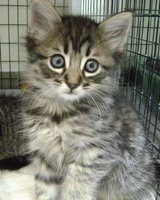
When we find new cats they often are very thin, some on the brink of starvation. When you drive late at night in Oakland or any urban area, you just keep running across cats and kittens. A few days ago, I saw a four-month-old kitten scrounging for food in a doorway of a store. I caught him, and it turned out he was more tame than feral —  and so very grateful to be eating. The next day, he just got up and ate and then went back to sleep, a contented kitten. He was very thin but is recovering nicely.

SOH:  Do you work with other groups?

Smyklo: I have mainly worked with Fix Our Ferals for years and also know many of the cat rescue groups in Oakland. Often there is a good relationship between the groups.

We got some support recently for our spay and neuter efforts through two feral cat groups and we hope that support will continue for at least a few months more. We also go to Fix Our Ferals’ clinic every other month. We take in 4 to 6 cats every week to be spayed or neutered.
We don’t do adoptions though we do have a good relationship with the Oakland Animal Shelter, recently praised for being one of the most improved shelters in the country. They take in cats or kittens from us and find them in homes. If some cats or kittens don’t thrive in the shelter environment then we come back to get them.

SOH:   How many volunteers work with Hungry Kitty?

We have four board members and three trappers. We do get a lot done for such a small group. We do work with other groups on spay and neuter projects and come to the aid of each other.

SOH:  What kind of donations does Hungry Kitty need more of?
Smyklo:The big need is to buy cat food. We have had a few larger donations but now are in great need of food. We go through four 16 lb bags of cat food a night and some canned cat food. The cats wait for us by the curb, and they know very quickly the sound of the engine of my car. One colony of cats starts running down the whole length of the street, crisscrossing in front of me.


I feed late night/early morning to avoid some of the traffic. Though we know that cat food that contains corn isn’t the best cat food, we do use Friskies, Purina, 9 lives whichever are on sale and we use coupons that people send us. We sometimes go to Costco for their Maintenance Adult cat food where a 25 pound bag of cat food sells for $17. That is a better quality cat food. We look for bargains as we spend one hundred percent of every donation on buying cat food. There is no overhead. And of course, there is no salary, as this is a grassroots effort.

We have an account at the vet’s when one of the cats that we bring in to be altered has medical problems. We have very few resources to pay for things like that but somehow we have managed so far.
Occasionally, a feral cat group will help us pay for a particularly sick cat. One cat that couldn’t be saved was ten years old and pregnant again. The cat was jaundiced, had a mouth full of rotted teeth and had a terrible blood workup. That cat’s name was Queeny and we had so looked forward to letting her senior years be free of having kittens. That was a very sad day for us to have her euthanized but the vet said that no amount of money spent on her could save her as she was old and very sick. We could use some donations to pay for the occasional very ill cat.

SOH:  How can people bring you food for the cats?

Smyklo: We can go to people’s houses or meet them at a nearby pet store if they have donations for us. Or sometimes people prefer to leave the food on a protected porch and we just go by to pick up the cat food.

SOH:  You mentioned you just spayed your hundredth cat.

Smyklo:  Yes, we did just take in our hundredth cat to be spayed.  We feed cats from Lake Merritt area, Chinatown, from fifth ave. to 105th Ave, that is a lot of territory to cover.

HUNGRY KITTY is a 501 (c)(3) nonprofit charitable corporation.  To learn more or donate to Hungry Kitty, got to http://sites.google.com/a/hungrykittylimited.org/www/home

Comments (1) »

Which came first, pet stores or pet insurance?

This wonderful letter/blog was recently brought to my attention.

Kathy Powelson, of the Paws for Hope Foundation, writes here about the trend in animal welfare in North America.   Here is some background on this post linked below. Please check it out.

On June 29th, Kim Pemberton [(Vancouver Sun columnist)] wrote, as part of her series, a story on the pros and cons of pet insurance.  In response to the article, I wrote the following [blog].

Leave a comment »