Archive for Uncategorized

AMONG THE ANIMALS: No bunnies for Easter

Originally published in City Living Seattle

March 12, 2012

Copyright City Living

Did you know that bunny rabbits, the kind we keep as pets, are a separate species from wild rabbits? The domesticated rabbit, oryctolagus cuniculus, is an animal descended from European cousins.

This fact may seem like trivia, but it is an important point in the world of animal welfare because domestic animals are those that require human care to survive and thrive.

As Easter approaches, bunny rescue workers shudder. While baby bunnies are available for purchase at pet stores all year, the urge to “get a bunny for the kids” at Easter suddenly seems stronger.
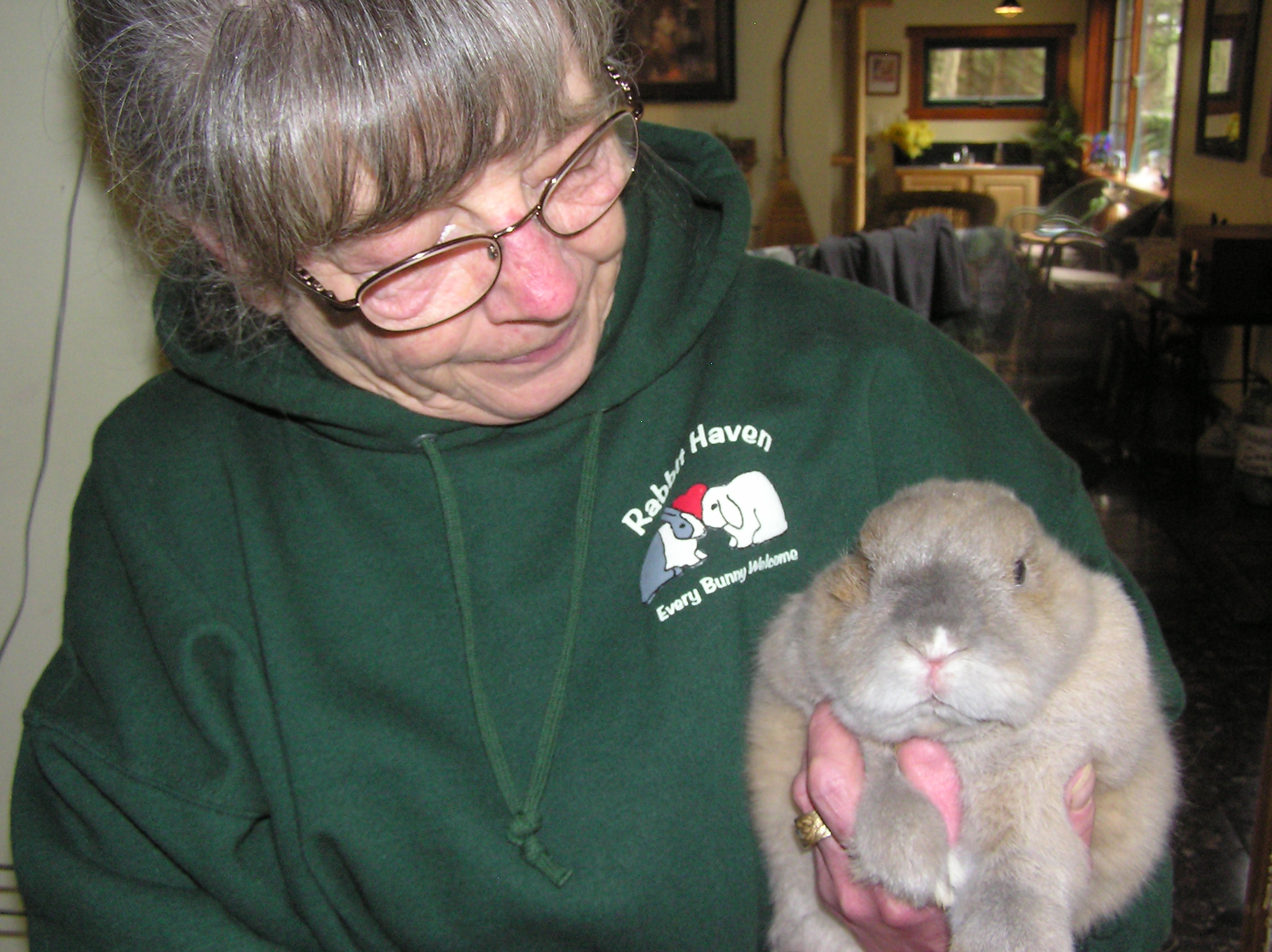
Sue and a special care bunny

Sue Brennan knows this story too well. She runs Rabbit Haven, a sanctuary outside Gig Harbor, and sees the sad endings for a lot of “Easter bunnies.”

As a child, I had an Easter bunny as well, and his story scarred my soul. The baby bunny came into our lives as an inexpensive pet for a low-income family.

The poor rabbit, like so many Easter bunnies, suffered terribly from the elements, being locked in an outdoor cage most of his life, sometimes with no food or water and scared to death by our dogs.

He spent only a matter of days out of his cage for years before we got him a pen. He was finally killed by a neighbor’s dog.

It’s a decade of tragedy that I wished I could have changed as a child, and I still wish that today.
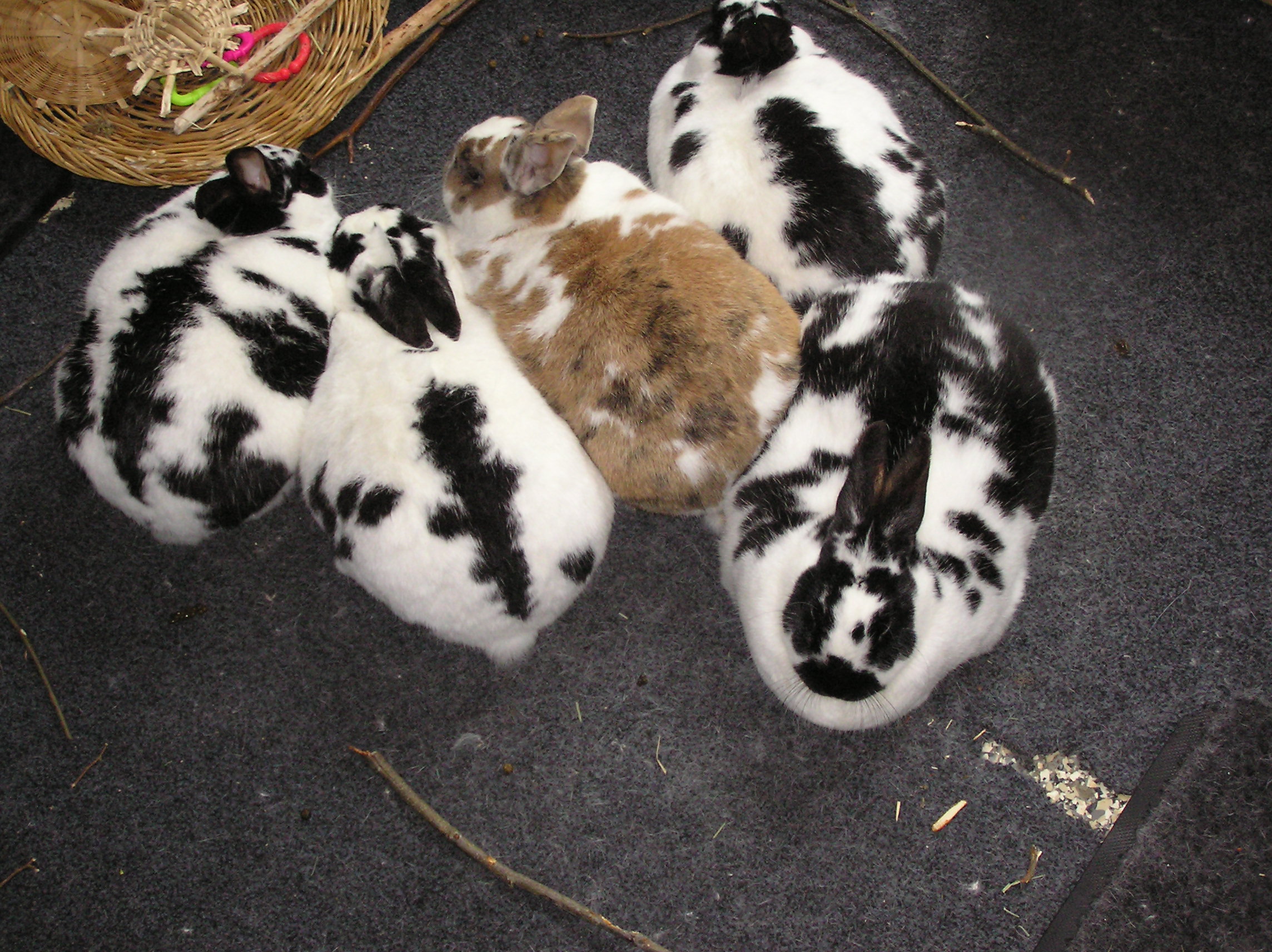
Bonded rabbits having a nap

Brennan said this is the fate of many Easter bunnies when people or families don’t realize that bunnies need warmth, companionship, love and care for eight to 10 years. They are as big of a commitment as a dog or cat.

“Children can be just as happy with a chocolate or wind-up toy bunny at Easter, and no one suffers,” Brennan said.

Finding perfect homes

The Seattle Animal Shelter (SAS) reports a significant spike in rabbit surrenders about one month after Easter, usually doubling their intake of rabbits to about 15 per month.

“People don’t realize that rabbits are considered an exotic pet, and may require more expensive veterinary care than people can afford. As a result, some rabbits that we get in can be in bad shape when they arrive at our shelter,” reported Seattle Animal Shelter (SAS) spokesperson Kara Main-Hester.

Main-Hester said this is the reason that SAS provides high-quality veterinary care and special “rehab” time in foster homes for bunnies that need some extra TLC upon arrival.

She said that rabbits should live indoors and be “part of the family.”

There are currently 19 bunnies awaiting adoption at SAS. All rabbits are spayed or neutered.

Rabbit Haven also finds perfect homes for each of its 50 or so adoptable bunnies. Many Rabbit Haven “buns” come from animal-rescue and shelter groups who found the animals as strays or in hording situations.

A safe feral rabbit colony at Rabbit Haven

An unintended consequence of pet-rabbit abandonment is the rise of feral-rabbit colonies in many parks and campuses along the Pacific coast. A section of Rabbit Haven has been made into a permanent home for some 80 feral rabbits rescued from the University of Victoria campus in British Columbia when the school administration was threatening a campus-wide cull on the abandoned pets.

“It is illegal to dump any domestic animal in the wild, including parks and neighborhoods. Rabbits are domestic animals and fall under this regulation,” Brennan explained.

Rabbit Haven volunteers also offer temporary shelter for rabbits owned by servicemen and -women while they are serving in Iraq and Afghanistan, knowing they will one day get to reunite bunny and family. Brennan tells the story of one soldier returning from his tour in Iraq whose bunny was so happy to see him that the rabbit literally jumped into the soldier’s arms.

Respected rabbits
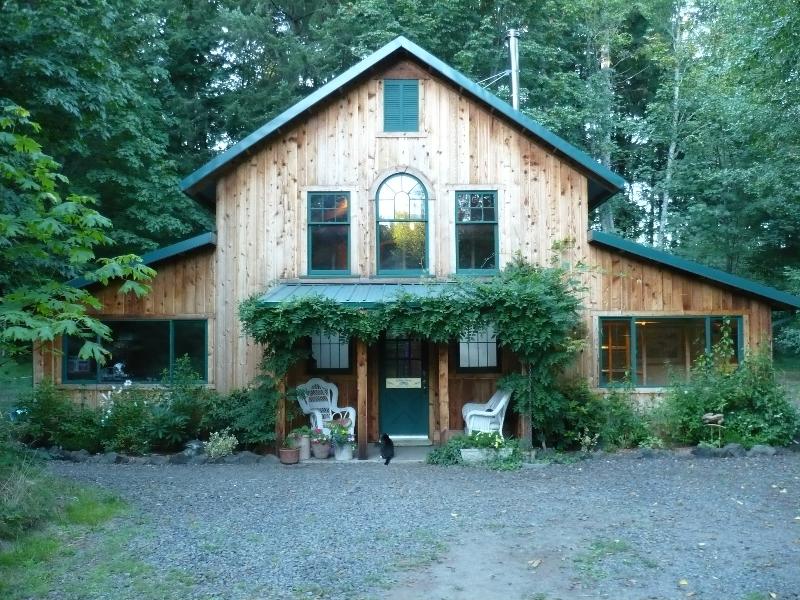
The Rabbit Haven barn

When you walk into the Rabbit Haven barn, one gets the impression of a comfy, mountain cabin right in the middle of the woods. A cute, red, wood-burning stove heats the recently constructed building, and the marble floor feels solid under your feet in the entryway. This place is not an animal shelter; it is a temporary home for bunny rabbits, and it feels like that, too.

“These are all recycled or reclaimed materials,” explained Sue Brennan. “Someone was just throwing out the wood stove, and the marble is excess from a construction site.”

The rabbit pens inside the barn

Brennan, a contractor by trade, has a practical sense of what makes up a good bunny barn. Each of the roomy rabbit pens houses two or three rabbits, and the walls are lined with shiny aluminum for easy cleaning.

“I got it from the Boeing surplus yard,” Brennan said. “It’s aircraft-grade aluminum.”

Rabbits painted on the barn walls

Yet, with the added touch of industrial materials, the Rabbit Haven barn is anything but stark. The aluminum-lined walls have been elegantly painted with bunny portraits.

Brennan hopes that Rabbit Haven will serve as a reminder that bunnies need to be treated with care and respect, just like dogs, cats and horses. Pet bunnies are not to be left outside in the elements or abandoned when no longer wanted. Pet bunny rabbits are domesticated to be with humans, share in bunny companionship and live indoors.

To learn more about Rabbit Haven, to donate or to adopt, visit rabbithaven.org.

If you currently have a rabbit that needs appropriate care, visit the House Rabbit Society website at www.rabbit.org.

Seattle Animal Shelter holds a special adoption day for rabbits and critters called Cool City Pets on the third Saturday of every month. Find out more at www.seattle.gov/animalshelter/adoption-events.htm.

CHRISTIE LAGALLY is a freelance pet columnist who manages the website “Sniffing Out Home: A Search for Animal Welfare Solutions” at http://www.sniffingouthome.org.
Comments (1) »

The Associated Press listens!

Now, this is what I call covering the news!  The Associated Press, which normally limits their coverage to human related issues and the occasional hording situation or puppy mill exposure, has listened to the plight of dog rescuers in Detroit.

These stories are not uncommon, but are rarely told.  And three cheers for Detroit Dog Rescue!

Leave a comment »

Yes, animal welfare solutions do happen!

Reposted from the Best Friends Blog

Historic Ohio legislation spearheaded by Best Friends signed into law today

This morning, Ohio governor John Kasich signed House Bill 14 into law and forever changed the lives of pit-bull-type dogs in Ohio, ending the only statewide breed discrimination in the United States.

What this means in Ohio is local dog wardens will no longer be obliged to kill every pit bull who enters a shelter because the law banning the adoption of pit bulls to the public has been changed. Pit bull owners will no longer be forced to carry punitive insurance policies because their bully-looking dog will no longer be deemed legally vicious just because of his or her appearance.

“This is a great day for these wonderful dogs who have died by the tens of thousands over the years in Ohio just because of the way they look,” says Ledy VanKavage, Best Friends’ senior legislative analyst and the driving force behind the fight to end this longstanding injustice. She adds, “A dog warden was in tears at the signing. She never thought she’d see the day when pit bulls would no longer automatically be killed in Ohio shelters.”

HB 14 replaces the previous breed-based vicious dog law with a graded system based on behavior, not appearance. There are now three categories of problem dog: nuisance, dangerous, and vicious, with sanctions appropriate to the level of aggressive behavior.

Grateful Ohioans are already sending notes of relief and thanks to the governor and lawmakers:

“Thanks so much. We were unfairly ticketed last year as we were walking our dog along a country road. He’s never shown any aggressive behavior toward humans. We were forced to pay $550 for insurance and then had to erect a $1,500 fence to keep him.”

“I adopted a ‘pit bull’ mix last spring. She is the BEST dog ever! I also have a blue tick hound mix and a little collie mix. Most people just looking at my three dogs would believe the AmStaff mix to be the most dangerous out of ignorance of their personalities. My old blue tick and the little collie are actually much more inclined to attack a stranger without warning. My pit bull mix loves everybody … how ironic!”

While the passage of HB 14 represents the end of statewide breed bans, there are still many challenges ahead for these dogs at the local level in some cities and counties around the country where they are rounded up and “deported” or killed. There is still much to do as long as such injustices remain enforced by local laws. Our fight will continue.

A lot of work and grassroots support has gone into this victory. Our sincere thanks goes out to the Ohio Coalition of Dog Advocates and to you, our dedicated supporters in Ohio who made this historic day possible.

Today was a great day for dogs!

Julie Castle
Senior Director, Communications

Leave a comment »

Nope, ‘dontfearthevegan’ (.com)

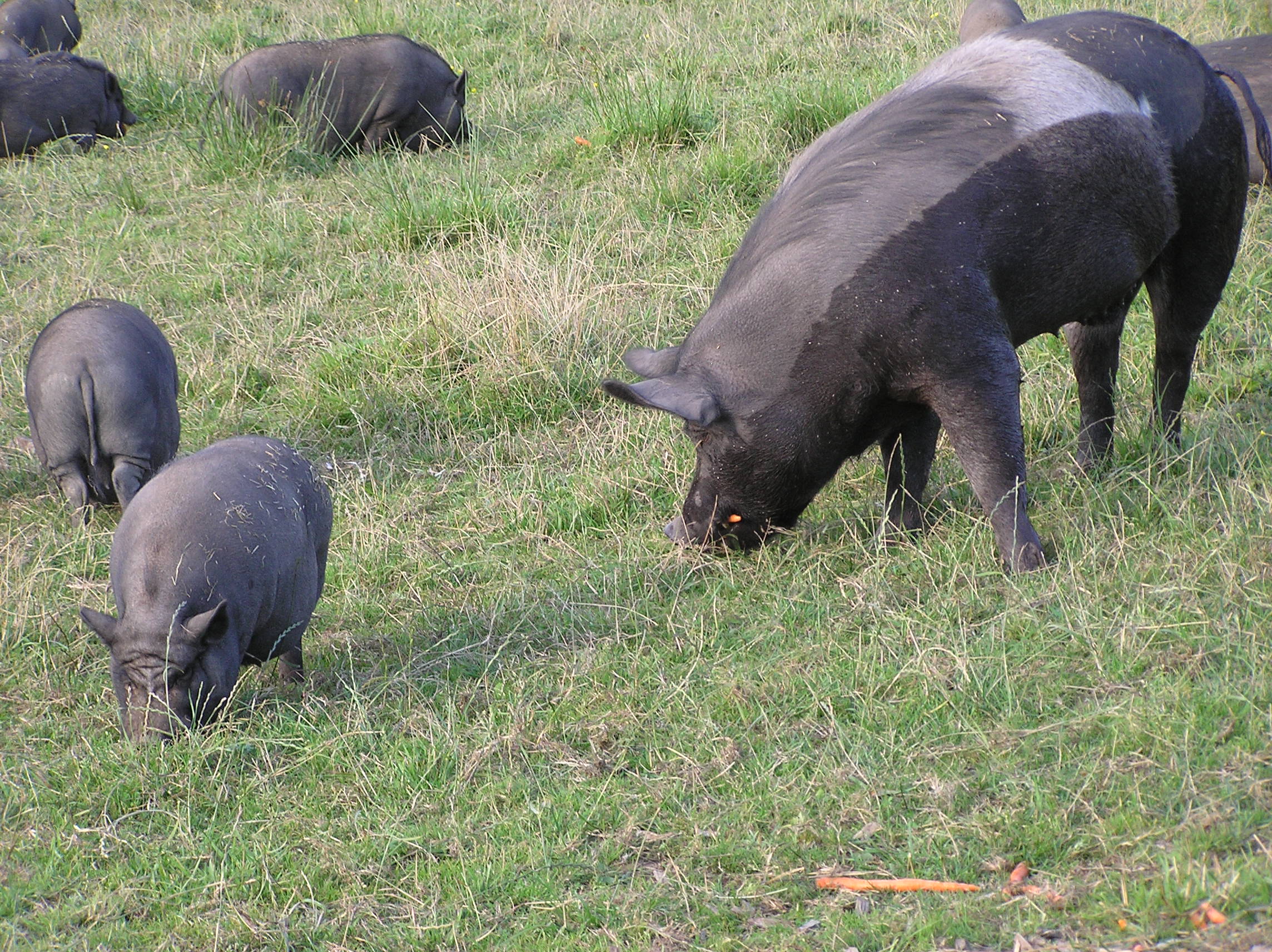
Pigs at Pigs Peace

My husband and I were enjoying lunch at our all time favorite vegan restaurant, Wayward Vegan Cafe when we enjoyed a pleasant surprise.  A young Girl Scout was selling vegan cakes to raise money for her troop and our local Pigs Peace Sanctuary.

Her courage led us to the website dontfearthevegan.com.  It’s a site on great vegan cooking and vegan lifestyles, including a great entry on being a vegan girl scout.  Check it out here.

Also, you have to try this vegan cake!  Why bother with animal products when vegan baking tastes this good!

Comments (1) »

Sad, but true. And it doesn’t have to be this way.

Factory farming is likely one of the greatest atrocities of our modern-day.   Cows, pigs, sheep, lambs, and chickens suffer horribly and needlessly in the name of profit and even in the name of “progress”.  Meanwhile, while our government subsidizes animal-based agriculture at the expense of tax payers, the increase in human consumption of meat and dairy has led to extraordinary health problems due to obesity, cholesterol, and excess protein intake resulting from eating those animal products.  It doesn’t have to be this way.  Factory farming is not necessary.   See the video below shown during the recent Grammy Awards.

http://youtu.be/aMfSGt6rHos

Leave a comment »

What we need to know…

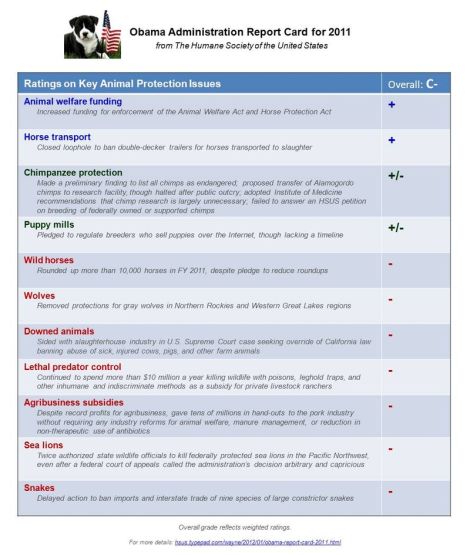
The US Humane Society rates the work of the federal government, and this year’s C- was a disappointment.  It’s important to realize that even progressive governments don’t necessarily see animal welfare as a progressive issue.  Hence the ratings for the USHS shown below.

This is a reminder of how important it is to keep educating ourselves about the changes necessary to make the lives of animals more humane and fair.  Because if we don’t speak out, the status quo and the powers-that-be are perfectly content with allowing issues of animal welfare to quietly melt into silence.  We know better, so here’s what we need to know to take action. (Click on the image below.)

Thank you to Eric for sending me this information from the USHS.

Leave a comment »

AMONG THE ANIMALS: Legislation under consideration could save thousands of animals’ lives

Image

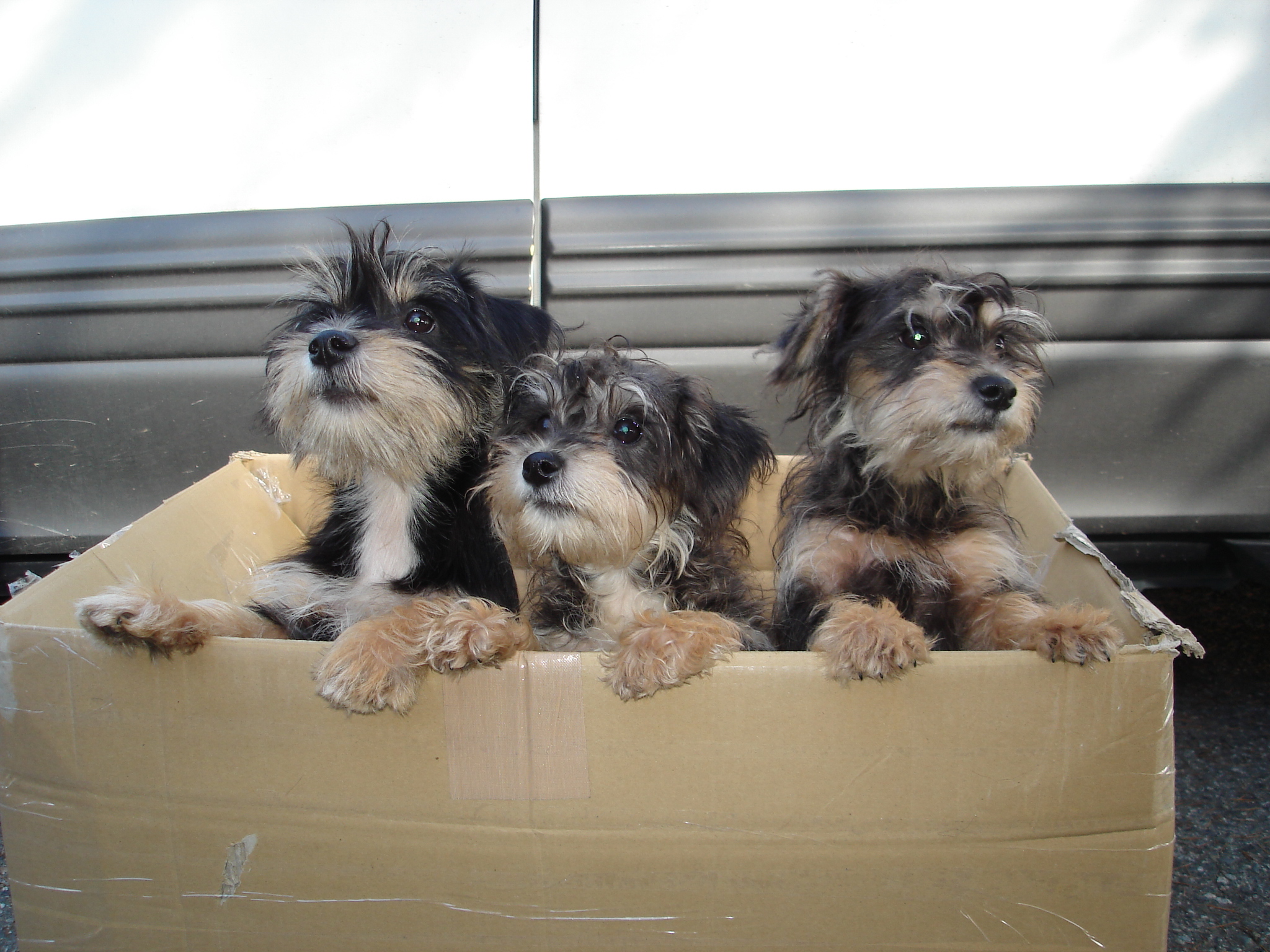
Puppies left at a NW shelter when someone didn’t spay their dog

Published in City Living Seattle
Feb. 7, 2012
By Christie Lagally
Copyright Pacific Publishing Company

For a lifetime, we have heard the mantra to spay and neuter our pets, and most of us heed the call.

But for many Washington residents, access to spay/neuter services and the ability to pay for them is not as straight-forward, and unwanted pets are a natural result. Public spay/neuter programs are a vital and effective life-saving tool to help reduce the number of animals that end up in shelters.

Sadly, tens of thousands of animals are brought to Washington shelters each year, with roughly a third or more of the animals euthanized.

Recently, the Seattle Humane Society announced some exciting news: It has achieved a benchmark of 100,000 spay/neuter surgeries over the last 30 years. Similarly, last year alone, the Feral Cat Spay/Neuter Project in Lynnwood performed 7,415 surgeries, and PAWS performed more than 500 public spay/neuter surgeries through its clinic and more than 1,300 shelter-animal surgeries in 2011.

While this is a big achievement, unfortunately, it is not quite enough to make a statewide dent in our pet-overpopulation problem, yet. Many animal-welfare groups are hoping for help from our state Legislature.

The legislation

Currently, the Washington state Legislature is open for business, and among the many other bills awaiting consideration in either the House or Senate are House Bill 1226 and Senate Bill 5151 — the so-called “spay/neuter-assistance bills.”

The Washington Alliance for Humane Legislation (WAHL) is advocating for these bills to be passed to implement a program to provide statewide spay/neuter services. This program would initiate a small fee on pet food paid by pet-food distributors to provide roughly 65,000 spay/neuter surgeries for pets of low-income families or homeless animals each year.

It is expected that the fee, which would cost Washington pet owners about 2.5 cents per pound of pet food, would bring in about $10 million per year and, in the long run, would dramatically reduce the burden that animal overpopulation, euthanasia and animal control has on state and local governments.

This spay/neuter program would not use any general funds.

In fact, according to WAHL board member Rick Hall, a statewide spay/neuter program has many additional benefits, including reducing the euthanasia of tens of thousands of cats and dogs in Washington shelters and helping to reduce the growth of feral-cat colonies.

Hall explained that at least eight other states in the country have similar programs, and states such as New Hampshire saw a 75-percent decrease in euthanasia and a 34-percent decrease in shelter intakes during the first few years its program operated.

More than 80 animal-welfare groups statewide have come out in favor of the spay/neuter assistance bills.

Image
Kittens at PAWS during ‘kitten season’

A proactive solution

Kay Joubert, the director of companion animal services for PAWS, said the organization “fully supports” the bills.

She explains that we need statewide spay/neuter programs to fill in the gaps in rural areas where no spay/neuter services are available. This program encourages pet owners to utilize the services of local veterinarians who would be compensated by the program for providing low-cost spay/neuter services to the community.

“PAWS was originally formed to provide access to low-cost spay/neuter services. It’s a core philosophy of PAWS,” Joubert said. “We can’t adopt our way out of the problem of pet homelessness. We have to have a multi-prong approach.”

Joubert feels that most pet owners won’t mind paying a little extra for pet food because they recognize that this program is a preventative measure.

“Our research shows that the pet-food fee is insignificant to the customer,” said Hall, whose research found that even simple price variance between pet-supply stores was larger than the difference a pet-food fee would add to the cost of food.

Nonetheless, several groups are against HB 1226 and SB 5151 because the fee is like a tax at a time when new taxes are as unpopular as cleaning the kitty box.  Most notably, the Pet Food Institute and the Washington State Veterinary Medical Association spoke out against these bills during a legislative committee meeting last spring, based on their concern that a tax or fee on pet food would be a burden to pet owners.

“I’d rather fund schools instead of prisons,” Joubert said, and I agree. I would rather fund a statewide spay/neuter program instead of shelter euthanasia. It’s simply a better use of our money and improves our community overall.

To find out more about the spay/neuter assistance bills, visit the Washington Alliance for Humane Legislation at www.savewashingtonpets.org. To learn more about PAWS, visit www.paws.org.

To have your pet spayed or neutered, contact your veterinarian or one of the following clinics listed on the Seattle Animal Shelter website at www.seattle.gov/animalshelter/spay-neuter-clinics.

CHRISTIE LAGALLY is a freelance pet columnist who manages the website “Sniffing Out Home: A Search for Animal Welfare Solutions” at http://www.sniffingouthome.org.
Leave a comment »

When caring for an older pet, you’re not alone

As Seattleites, many of our families include dogs, cats and the scatterings of many other types of pets.  For most of us, our dedications to them is  unwavering, even when the days of romping in the hills have begun to wane.

It’s natural to feel the stress and uncertainty of caring for an older pet and even those pets who are preparing to ‘cross the rainbow bridge’.

That’s why a group of volunteers formed AHELP – Animal Hospice and End-of-Life Palliative Care Project.  AHELP is holding an open house to connect people with resources in the community.  See the details below or at AHELP’s website.

AHELP Project’s 2nd Friendship Day Open House

“ENHANCE YOUR LOVING BOND”

 Wednesday, February 15, 2012, 4:30 – 8:30 p.m.

Education Room at Seattle Veterinary Specialists, 11814 115th Ave NE, Kirkland, WA 98034

 Meet the AHELP community of animal lovers, service providers and veterinarians at a pet friendly event celebrating your relationship with your animal friend.


Talk with AHELP Professional Network members who will:

  • Teach you how to comfort your animal through massage, Tellington TTouch, reiki, and more. We will have opportunities for you and your animal to sample these modalities.
  • Encourage you to tap into your intuition for effective decision making.
  • Show you how to focus on your emotional wellness to promote daily functioning and healing. We will offer resources for you to be ready when you need it most.

For more information, see the AHELP website at ahelpproject.org

Leave a comment »

Today and Wednesday (7/9), fire up your email…

Save Washington Pets has released a call to action for today (Tuesday 2/7) and tomorrow (2/8).  See excerpt below:
We Need Your Voice to Help the Animals:
Ask the Senate to Pass the Spay/Neuter Assistance Bill, SB 5151

 Please take 5 minutes NOW to let the members of the Senate Ways & Means Committee know that you want SB 5151, the spay/neuter bill, to be passed as part of the state budget.

SB 5151 would raise about $10 million per year exclusively for assistance with dog and cat spay/neuter surgery.   

 We expect that the cost savings resulting from this bill to far exceed expenditures, with savings in the range of $17-18 million per year or more.  Those savings would result from reduced animal care and control costs in our communities–costs we bear through city and county services, costs borne by nonprofit animal welfare organizations, and money spent by caring individuals who devote their lives and personal financial resources to help homeless animals.  

 We need to let our legislators know that in these difficult budget times it’s important to make wise spending decisions that reduce the burden of animal care and control costs and improve public safety.    

Please go to this page of our website and follow the three quick and easy steps to let the state senate know that you want this bill passed.   

It’s important that you do this Tuesday or Wednesday (February 7 or 8) if possible. Please spread the word immediately through your network of friends, supporters, organizational contacts, Facebook, and other social media.  Thank you!

Questions? Contact us at info@savewashingtonpets.org   

Please keep in touch with Washington Alliance for Humane Legislation/Save Washington Pets at our website, www.savewashingtonpets.org and on Facebook.

Leave a comment »

NPR could use some assistance reporting on veganism

I love NPR, but tonight I was disturbed to hear this biased report on the Physicians Committee for Responsible Medicine anticheese campaign.  Listen to the article on NPR’s All Things Considered.

While NPR usually does a great job of fair reporting, I felt the need to remind them that they need to apply the same integrity to issues of animals and food.  See my letter to the editor below.

Dear NPR:

Thank you for reporting on the Physicians for Responsible Medicine (PCRM) billboards about the effects of cheese.  While your coverage on this issue is appreciated, it was reported with an unfair bias against the PCRM’s position, especially when the reporter stated that Dr. Neal Barnard was promoting his “personal belief” about a vegan diet.  While I’m sure Barnard is a vegan, his group has not been promoting veganism based on belief!  Meat and dairy has been shown in mainstream medical studies to be the major cause of obesity, heart disease, and indirectly, diabetes.  Furthermore, veganism or a ‘plant-based diet’ has been shown for two decades to be the best diet to reverse heart disease.  
Typically NPR has done a better job of researching the background of groups who have taken a stand, but in this case it appears that the reporter’s own bias against veganism did not allow her to consider that there was a long term scientific basis and mainstream medical, peer-reviewed research in support of the statements that PRM is making most of which is funded and published  by mainstream clinical foundations, publications and top universities – such as the NIH, Cornell (i.e. “The China Study”) and Journal of the American Dietetic Association. 

The PCRM’s position on veganism wasn’t based on Barnard’s ‘belief’.  It is based on sound research and many Americans have taken the warnings of nutritionists and physicians to heart and choose to avoid meat and dairy.  This isn’t radical; it’s just logical.  

Comments (1) »